

How can Europe accelerate real progress towards gender convergence in the digital decade?
The Women in Digital (WiD) Annual Report 2025 steps forward with the clearest picture yet of how girls and women move through the digital pipeline across the EU-27 and in four benchmark countries: Brazil, Canada, India, and the United States. As the flagship output of Connecting Women in Digital, it brings together a wide evidence base, a harmonised methodology, and the new WiD Index to map each stage of the journey—from early education to leadership roles in the digital economy.
The publication highlights where progress is taking shape, where talent continues to leak out of the system, and which structural forces hold women back from fully participating in ICT careers. It combines quantitative indicators with insights from Member States, thematic experts, and the 2025 Women in Digital Survey, building a sharp, actionable understanding of Europe’s digital gender gaps.
With this analysis, the WiD Annual Report 2025 strengthens Europe’s push towards the Digital Decade goals and gives policymakers, practitioners, and organisations the evidence they need to drive meaningful change—faster, and with greater precision.
From Classroom to Boardroom: the WiD Index put into Effect
The WiD Annual Report introduces and operationalises the Women in Digital (WiD) Index 2025, a composite benchmarking tool designed to measure how girls and women move across the four critical phases of their careers: STEM education, ICT higher education and training, Digital employment, and finally Leadership in ICT
Rather than analysing isolated stages, the WiD Index follows women’s journeys across the entire pipeline, identifying weak transition points where participation declines and systemic barriers persist.
The findings reveal a stark reality:
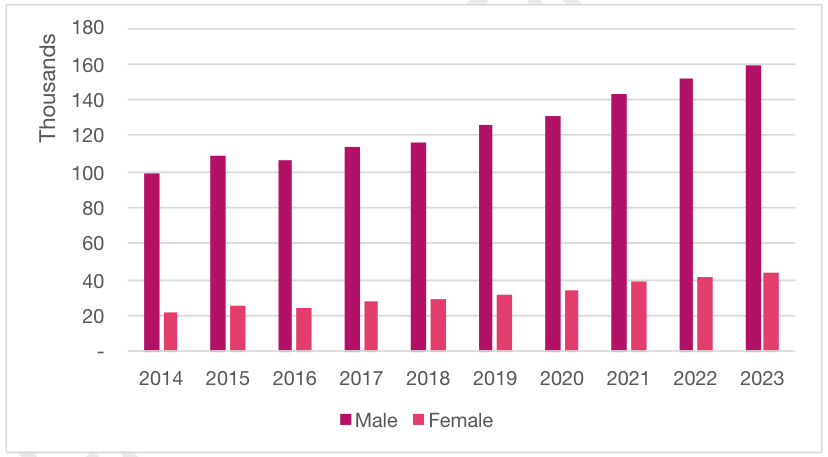
- Women represent roughly one third of STEM graduates in the EU.
- Their share drops to around 20% of ICT graduates.
- Only 19% of ICT specialists are women.
- Fewer than 25% of digital leadership positions are held by women.
Despite modest progress over the past decade, structural imbalances remain deeply entrenched.
Critical Conversion Gaps Identified
The report highlights three major transition gaps where targeted interventions are urgently needed:
1) STEM to ICT education
While girls perform comparably in science and mathematics, their participation sharply declines when moving into specialised ICT degrees.
2) ICT education to digital employment
A significant share of women with ICT qualifications either do not enter ICT roles or transition to non-technical positions.
3) Digital employment to leadership
The “glass ceiling” effect persists, with caregiving responsibilities, sponsorship gaps, and non-transparent promotion systems hindering progression.
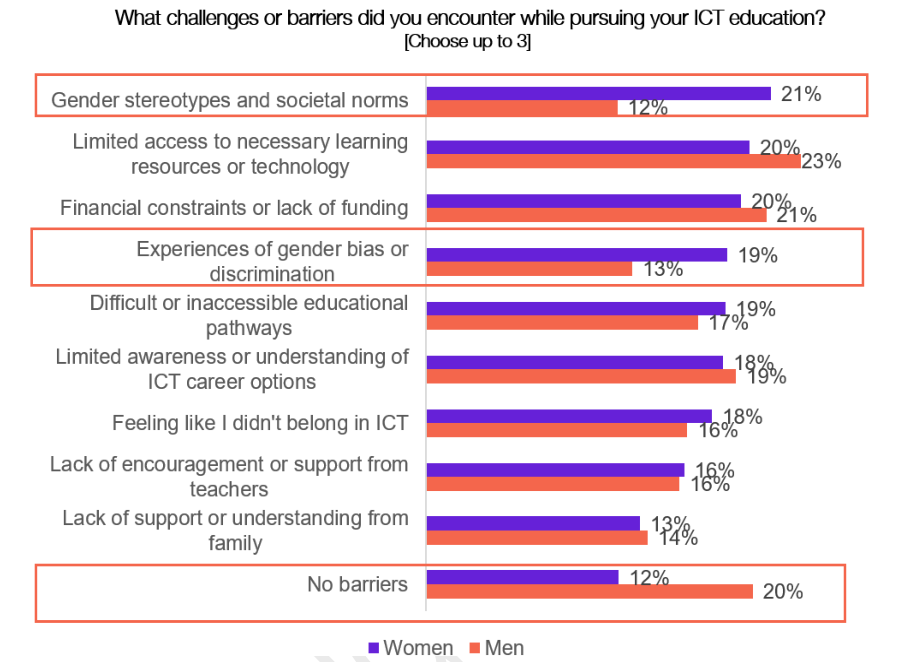
These findings are reinforced by insights from the 2025 Women in Digital Survey (4,454 respondents across the EU27), where: 66% of women report societal gender norms as a persistent barrier, 47% feel they must exert more effort than men to prove equal competence, career breaks significantly affect women’s long-term progression.
Gender Equality Is a Competitiveness Issue
The report connects gender equality directly to Europe’s economic future.
Under the Digital Decade Policy Programme, the EU aims to reach 20 million ICT specialists by 2030 and achieve gender convergence. However, current trends project only 12.2 million ICT professionals by 2030, leaving a shortfall of 7.8 million specialists.
Closing the gender gap in tech is an economic necessity, in addition to a fairness imperative. Estimates suggest that raising women’s participation in tech could increase EU GDP by up to hundreds of billions of euros in the coming years.
The WiD Annual Report therefore positions gender equality as a central pillar of Europe’s digital sovereignty, innovation capacity, and long-term resilience.
A Benchmarking and Policy Tool for Member States
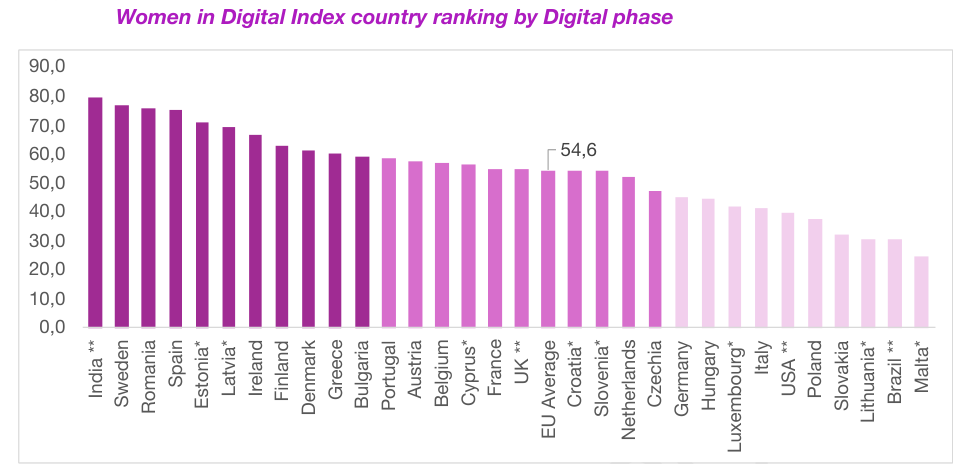
Beyond diagnosis, the report provides a comparative ranking of Member States through the WiD Index, phase-by-phase scorecards, identification of stable performers and abrupt transition gaps, a review of national policy initiatives and EU funding allocations, and preliminary evidence-based recommendations.
It also reveals that only 3.4% of Recovery and Resilience Facility funds and a marginal share of Cohesion Funds are currently directed toward gender equality objectives in digital transformation, signalling the need for stronger gender-responsive budgeting.
The report is designed as a living instrument, to be replicated annually and continuously improved through collaboration with national authorities, industry, academia, and civil society.
As Europe prepares the next phase of its gender equality and digital strategies, including the evolution of the EU Gender Equality Strategy 2020–2025, the WiD Annual Report offers a robust foundation for action. From classroom to boardroom, systemic change is the only path forward.


